

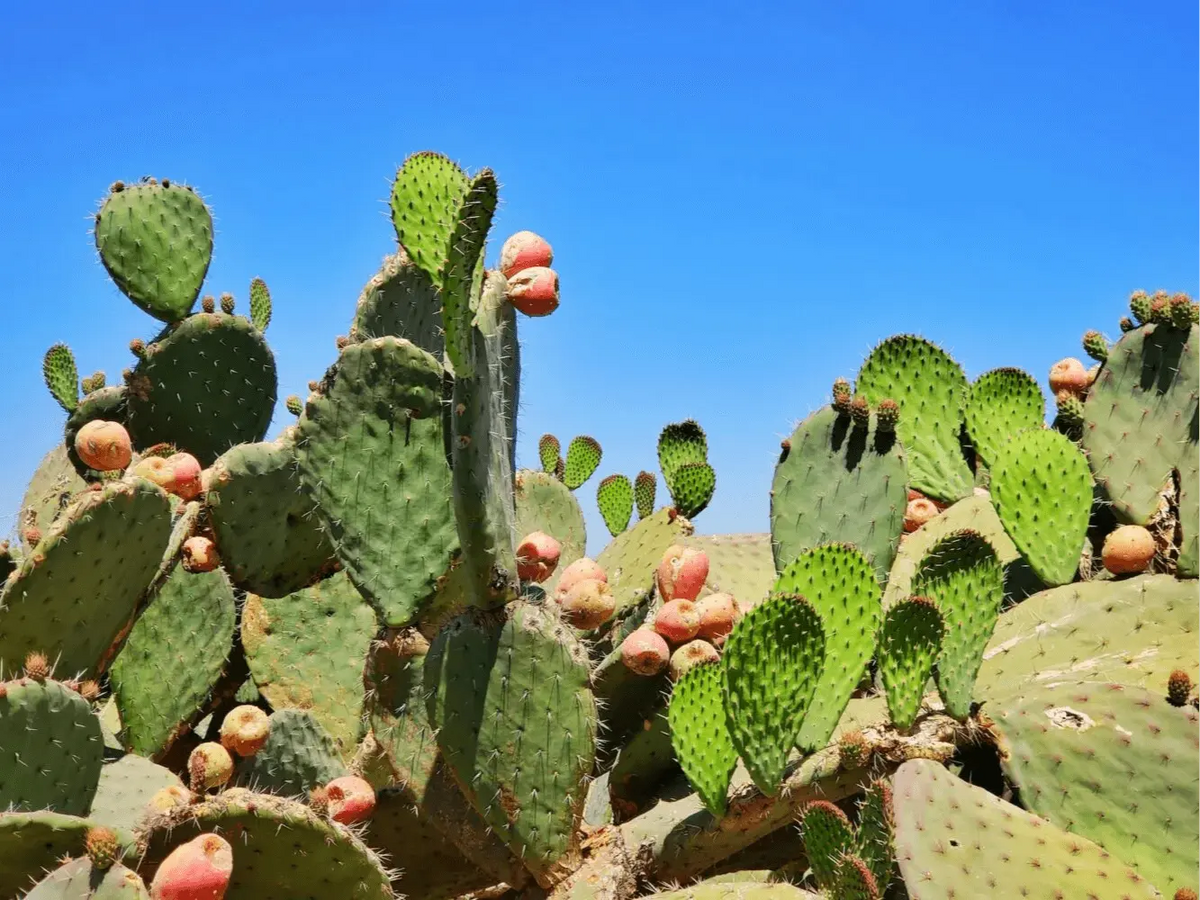
Anyone who’s spent any time in Mexico or loves Mexican food has surely come across nopales. They’re the edible pads of the nopal cactus—and they come with a surprising amount of health benefits.
Spiky, but Satisfying…
While it might seem a little intimidating for those unfamiliar, many people around the world eat cactus as a vegetable.
Nopal cactus is very common in Mexican cuisine, and enjoyed across Latin America, tracing its roots back to Aztec and Mayan times. If you’re put off by the spikes, don’t fret—the tough exterior of the young cactus pads (nopales) are removed before cooking!
Traditionally, nopales are prepared by carefully rinsing the cactus pads before chopping and adding to all sorts of dishes, from tacos to salads. They can also be enjoyed as a main dish, and are particularly good grilled. Many compare them to green peppers in terms of texture and appearance.
If you visit Mexico, you’re likely to come across nopales planted in pots outside doors or on balconies, or in the wonderful markets of almost every town. You can spot the round, pale green, spiky fruit by roadsides in Mexico, or in gardens. It particularly thrives in volcanic regions and chaparrals.
Alternatively, the cactus may come to you! In Mexico, it’s common for older women to sell nopales door to door, carrying them in buckets which they balance on their heads. All in all, the nopal cactus industry is worth around $150 million USD, and employs 10,000 people.
In the US, you can probably find canned or jarred nopales in the supermarket, or look for dried cactus or cactus juice.
Enjoying Nopales
The nopal cactus is a surprisingly versatile accompaniment to many different dishes. Whether you try it in the aforementioned tacos and salads, or decide to pair it with shrimp or potatoes, it adds a satisfying kick to many recipes. Huevos con nopal (nopal and eggs) is a popular Mexican breakfast, enjoyed with homemade salsa.
Today, the nopal cactus is also used to make traditional sweets.
If you want to give the nopales cactus a try, you could also consider using it topically. Like aloe vera, nopal juice feels soothing on the skin, and it’s often used as a home remedy for insect bites and small cuts.
Two other of its myriad uses include strengthening plaster and creating dyes in pre-Hispanic times.


